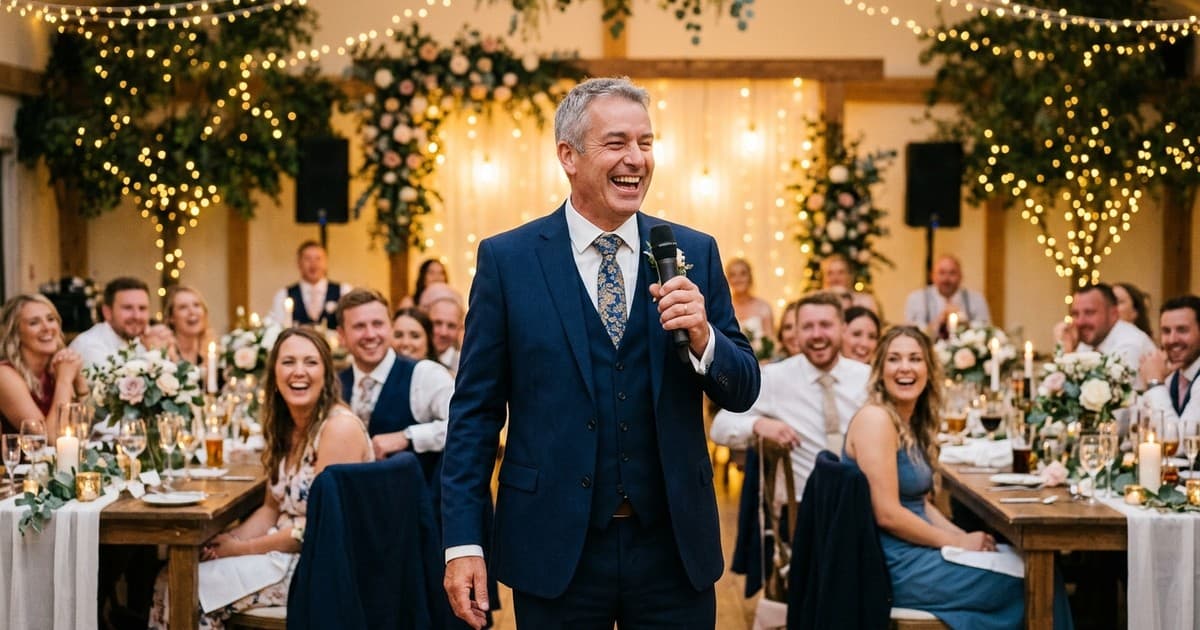
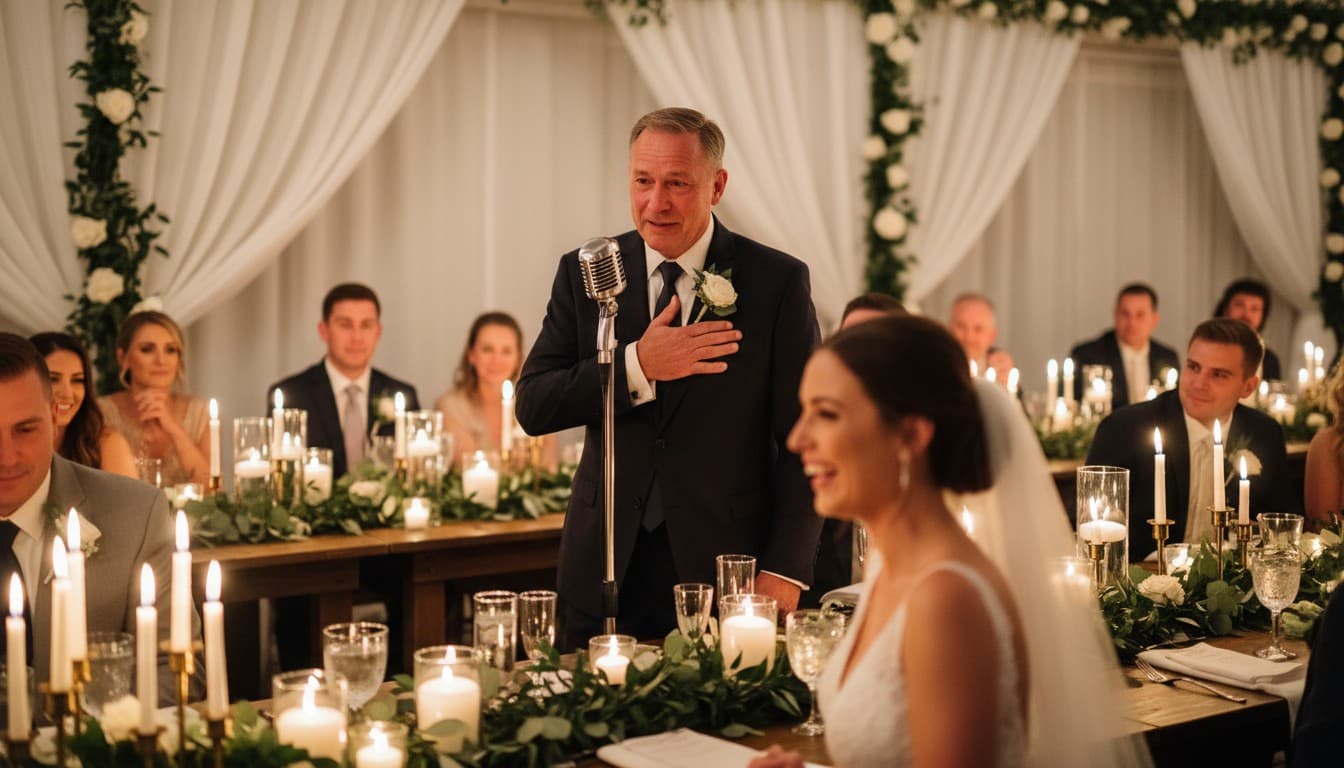
What Makes a Great Father of the Bride Speech
You've watched her grow up. You've been there for all of it. Now you have seven minutes to say what that meant. Here's how to do it justice.
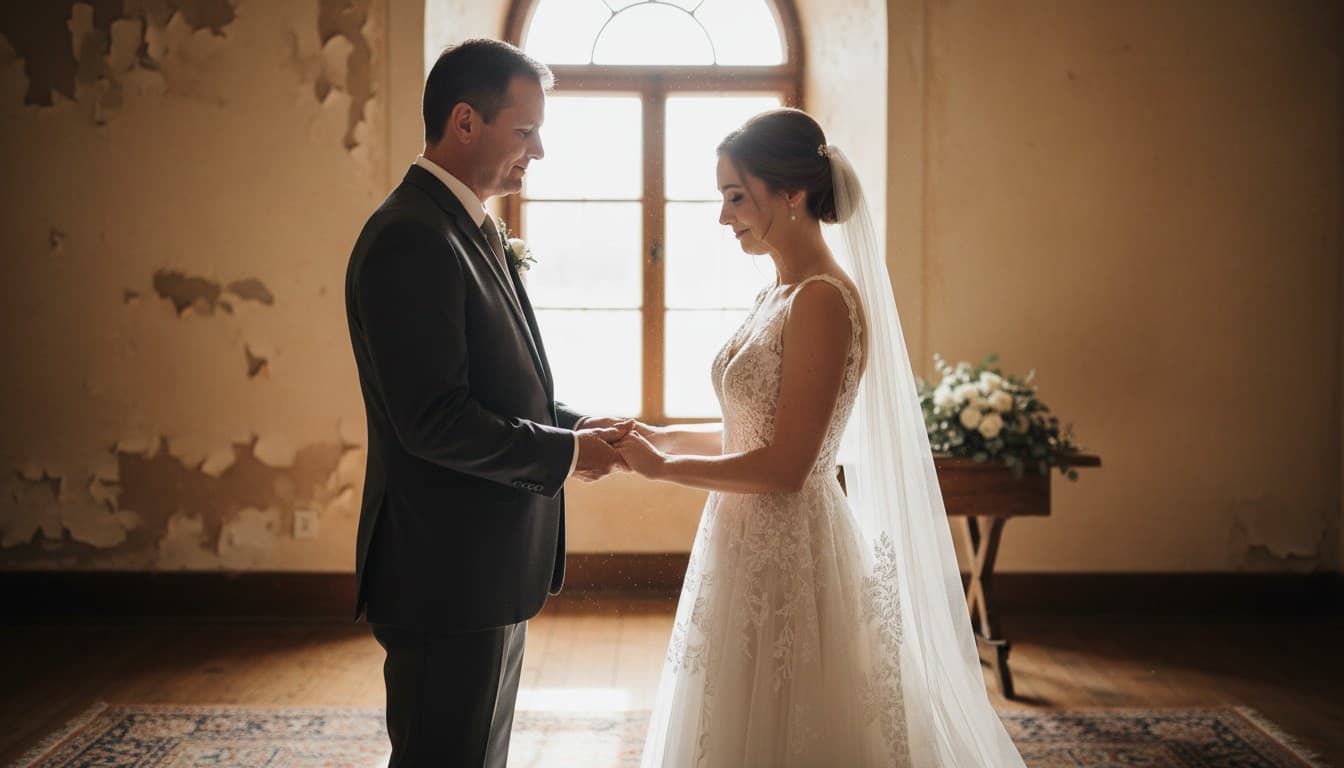
Part of the Father of the Bride Speech Guide : structure, examples, and what to say when words feel impossible.
You've been rehearsing this speech in your head for years. Not consciously. But every time you watched her cross a stage, or get hurt and get back up, or figure something out on her own, some part of you was filing it away.
The hard part isn't finding the material. It's choosing.
The father of the bride speech has a challenge that no other wedding speech has: you have too much. You've known her longer than anyone else in that room. You've seen more versions of her. You've been there for things no one else knows about.
The speech isn't about what to include. It's about what to trust.
The shape of a great father of the bride speech
The speeches that stay with people tend to follow this shape:
The image that contains the whole story. Start somewhere specific. Not at the beginning of her life. At a moment. The one that, when you think of her, comes back first. The one that somehow says everything you want to say before you've said a word.
It might be the morning she left for college. It might be the summer she was nine and spent three weeks trying to teach herself to skateboard and never got it but never quit. It might be something she said in the car once that you've carried ever since.
Find that image. Start there.
The through-line. Every great father-of-bride speech has a quiet argument running through it: here's who she is. Not a list of accomplishments. Not a list of qualities. A portrait. One continuous observation of a person you've watched become herself.
This is where you slow down and be specific. What does she do that no one else does? What's the thing she always says? What does she believe so hard that it's shaped the people around her? What has she taught you? Because she has taught you things, whether she knows it or not.
The turn toward him (or them). At some point, you pivot from her to them together. This is delicate. You're not handing her off. That language is out of fashion, and besides, it misses the point. You're welcoming someone new.
What do you say about the person your daughter chose? The best line isn't a compliment. It's an observation. The thing you noticed about them that told you your daughter had chosen well. A specific moment, not a general impression.
The close. Short, direct, and from the chest. You're not wrapping up a presentation. You're ending a letter you've been writing her whole life.
What not to do
Don't give the biography speech. "She was born in..." and then you walk through every year of her life in order. This speech is for the audience, not just for you. They need something to feel, not just facts to receive.
Don't read off your phone. Or if you do, know it well enough that you can look up. The room needs to see your face. That's where the emotion lives.
Don't end on a joke. Humor is welcome. A well-timed moment of lightness makes the tender parts land harder. But end on something that costs you something to say. The room will feel the difference.
Don't apologize. Not in the speech, not in the intro, not about being nervous. Start with the thing you actually want to say.
The question worth sitting with
Before you write, before you draft, before you figure out structure. Sit with this question for a day or two:
If I could say one thing to her today, in front of everyone who loves her, what would I want her to hear?
Not what you want the audience to hear. Not what sounds like a good toast. What you would tell her if it were just the two of you.
Your answer to that question is the spine of your speech. Everything else is just context.
On length
Seven minutes is a ceiling, not a target. Five minutes is perfect. Four and a half, delivered well, is unforgettable.
The instinct when you have a lot to say is to say more of it. The speech that actually moves people leaves things unsaid, leaves room for the audience to feel something you didn't spell out.
A note on crying
You will probably cry. That's fine. The room wants you to cry. It's a signal that this is real.
The trick is to keep going. Pause. Breathe. Let the room be with you in it for a moment. Then continue.
The only thing better than a father who kept it together is a father who was fully present, and let himself be.
Keep reading:
- Father of the Bride Speech: A Complete Guide
- Father of the Bride Speech Tips: How to Say What You've Always Felt
- How to Write a Wedding Speech for Your Daughter
You've been preparing for this your whole life. You just need the right help to say it.
Ready to write yours? SpokenVow interviews you like a speechwriter would, pulling out the specific memories, the real observations, the moments only you know, and builds drafts that sound exactly like you.