How to End a Wedding Speech (The Part Everyone Gets Wrong)
Most wedding speeches fall apart in the last 30 seconds. Here's how to write a closing that actually lands, with examples for every role.
Part of the How to Write a Wedding Speech guide: structure, length, opening lines, and delivery.
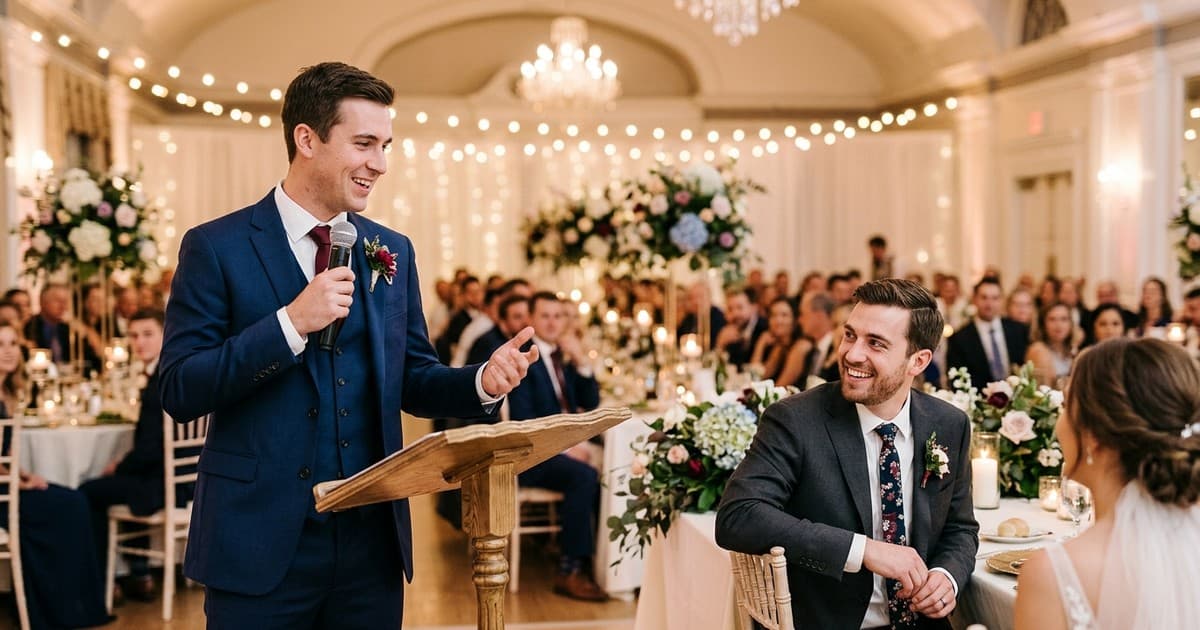
Watch enough wedding speeches and you'll notice a pattern. The speaker finds their footing about two minutes in. They get comfortable, hit their stride, tell the story that actually matters. The room is with them. And then, somewhere around the final 30 seconds, something goes wrong.
"So, yeah. That's basically it. Anyway... please raise your glasses."
Three hundred people who were feeling something two seconds ago are now watching someone evaporate in real time.
The ending is where most speeches fall apart. Not because the speaker runs out of things to say, but because they don't know how to land. They've been building toward something, and when they get there, they don't know what "there" looks like.
Why the ending is harder than the rest
You'd think the ending would be easy. You're almost done. But that's exactly the problem.
When you're in the middle of a speech, you have momentum. You're telling a story, making a point, getting to the next thing. The ending asks you to stop. To release all that tension in one deliberate move instead of just letting it drain out.
Most people default to one of two failure modes. They trail off, which is when the speech just sort of... stops, like a car running out of gas two blocks from home. Or they rush, which is when they spot the finish line and sprint toward the toast line before they've actually said the thing they meant to say.
Both versions leave the room feeling like something got cut short.
The three moves that make a closing work
There's no single magic formula, but almost every speech ending that actually lands does three things in sequence. Not as a checklist. As a natural progression.
The first move is landing the emotional beat you've been building toward. This sounds obvious but it's where most people go wrong: they introduce new material at the end. A final anecdote that doesn't connect to anything. A sentiment about "life and love" that came from nowhere. The end of a speech isn't the place for new ideas. It's the place where the thread you've been pulling finally comes tight. If your speech has been about how the groom learned to stop being afraid of vulnerability, the ending shows where that journey arrived. If it's been about the couple's weird, specific chemistry, the ending says: this is what it adds up to.
The second move is turning to the couple directly. For most of the speech, you've been talking about them to the room. In the final 30 to 40 seconds, you talk to them. This shift is small but it changes the entire register. "She is the kindest person I know" is nice. "You are the kindest person I know, and watching you build a life with him is one of the best things I've gotten to see" is something else. Address them by name. Look at them. Say the thing you'd say if nobody else was in the room.
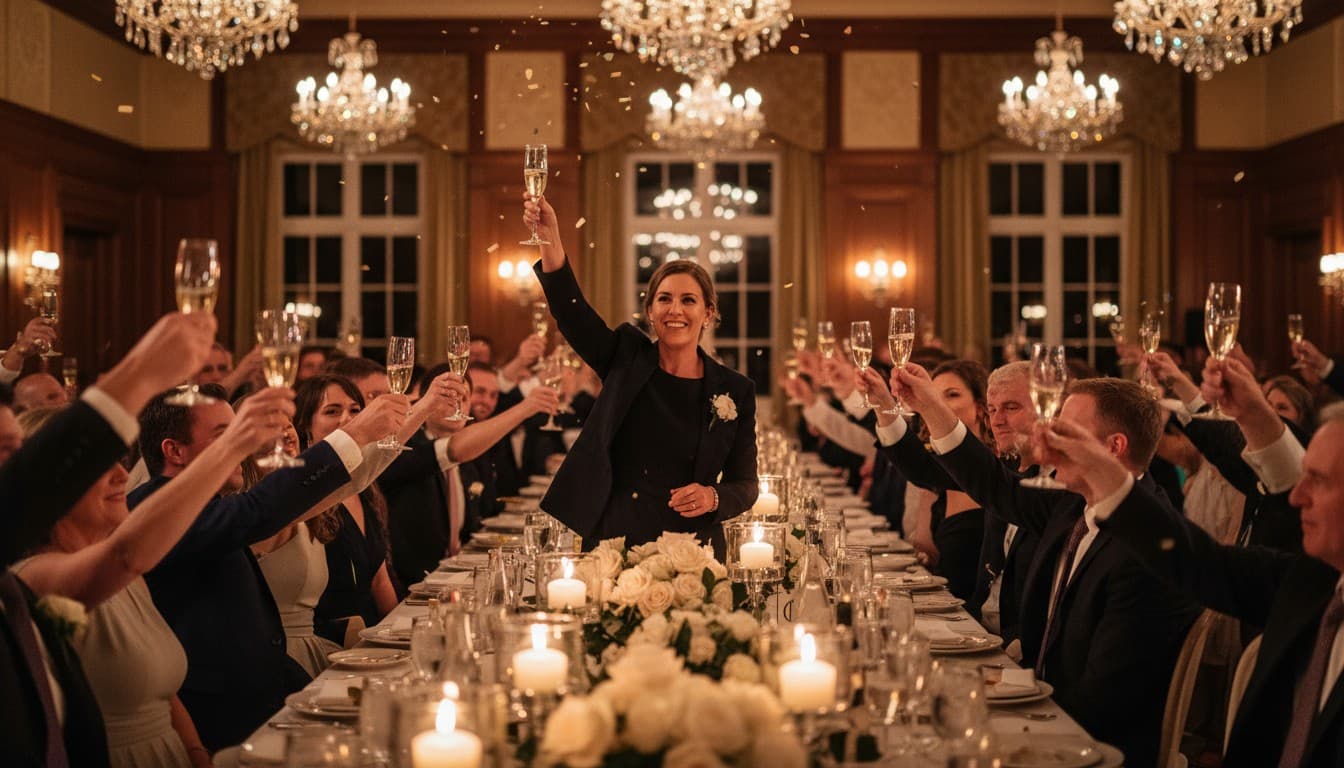
The third move is the toast line itself. Not the generic invitation to raise glasses. The actual sentence that earns the drink. More on this below.
What not to do
The fake ending is common at weddings and it's brutal for a room. The speech seems to be wrapping up, guests start reaching for their glasses, and then the speaker says "but I want to say one more thing" and keeps going. You can feel the air go out. If you're writing a speech and you notice you've written "and finally" somewhere before the actual ending, cut everything between that and the real close.
Crying through the last line without recovering is another one. Getting emotional is fine. Expected, even. But if you're sobbing too hard to speak, the room shifts from moved to worried. If you know you're going to get emotional at a specific line, write two or three sentences after it. Give yourself a landing strip.
"Without further ado" before the toast is not an ending. It's an ejection seat. The phrase signals that you've given up on writing a close and are hoping the ritual will finish the job. It won't. "Without further ado, please raise your glasses" is the equivalent of leaving the table without saying goodbye.
Five example closings, one per role
These are complete final paragraphs plus toast lines. Read them as a unit. Notice what the toast line does in relation to the paragraph before it.
Best man
Tom, I've watched you navigate a lot of things over the years, some of them badly, most of them eventually fine. I know you better than almost anyone. And I want to tell you, in front of all of these people, that marrying Jess is the best decision you have ever made. Not just for you. For everyone who loves you, because you're better with her. You're easier. You laugh more. Whatever she's doing, keep letting her do it.
To Tom and Jess. About time.
The "about time" toast line works because it carries the whole friendship in three words. It's specific to their dynamic without needing explanation.
Maid of honor
Sara, I have watched you become someone extraordinary over the past few years, and I know it didn't happen alone. James didn't fix you. You didn't need fixing. But he made it easier for you to be yourself, and that's the thing I keep coming back to. The best relationships do that. They give you room.
To Sara and James. May you always give each other room.
The callback to "room" in the toast line earns its echo. The room registers it.
Father of the bride
I have spent thirty years watching my daughter. I know what she looks like when something is real and when she's being polite. When she met Daniel, she stopped being polite about it. She just said, "Dad, this is it." She was right. She usually is.
Please join me in raising a glass to my daughter and her husband. We couldn't be more proud, and we couldn't be more happy for you both. To Emma and Daniel.
Simple and complete. The story does the work; the toast line doesn't need to be clever.
Groom
I wrote about fifteen drafts of this speech. Most of them were too long. A few of them made me cry in the parking lot, which was not ideal. What I kept coming back to, every time, was the same thing: I don't know how to explain what it's like to love someone this much. So I'll just say: Mia, I'll spend the rest of my life trying to be worth this. You're the best thing that's ever happened to me.
To my wife. Finally.
The "finally" lands because the whole speech has been about the difficulty of getting to this moment. The room knows what it means.
General guest
I've known both of them separately and I've known them together, and I'll tell you what the difference is. Separately, they were both people you liked immediately. Together, they're people you want to be around for as long as possible. That's rare. That's the thing.
To Claire and Ben.
No flourish. The observation does enough that the toast line doesn't need to.
The toast line itself
Eight versions of the same sentiment, from weakest to strongest:
"Please raise your glasses to the happy couple."
"Please join me in raising a glass to Lucy and James."
"To Lucy and James. Congratulations."
"To Lucy and James. The best is ahead of you."
"To Lucy and James. We love you both."
"To Lucy and James. May this always feel the way it does right now."
"To Lucy. To James. To whatever impossible thing you figured out together."
"To Lucy and James. You already know what I want to say. Here it is anyway."
The difference isn't about complexity. It's about whether the toast line connects to something in the speech that came before it. A generic toast closes the window. A specific one, even a short one, keeps it open just a little longer.
A few things worth remembering
Write the ending last. Start with the stories, find the emotional thread, land on the one true thing you want to say. Then write the ending that releases it. If you write the ending first, you'll spend the whole speech steering toward something that may or may not fit what you actually want to say.
Read the last 60 seconds out loud before the wedding. Not the whole speech. The last 60 seconds, specifically. That's the part most people haven't practiced enough. That's the part where nerves hit hardest and the words need to be automatic.
The ending is the last thing they'll hear. Two weeks after the wedding, when someone asks how the speeches were, what they remember is the last image you left them with. Make it worth remembering.
Keep reading:
- How to Start a Wedding Toast
- The 3-Minute Wedding Speech Template
- 50 Wedding Speech Opening Lines That Actually Work
If you're building your speech from scratch, SpokenVow can help you find the right ending. Tell us about the couple and your relationship, and we'll help you get to the thing you actually want to say.